Frequently, we are asked how often a client should return with their dog for a nail trim. We usually answer approximately once a month for most dogs, but individuals vary. Recently, though, we had an interaction that made me wonder if we should clarify what the goal is.
I need to start by explaining that different breeds have very different nails. Some breeds tend to have a compact, upright foot. Other breeds tend to have a flatter, straighter toe. On a compact, upright foot, the nails tend to angle from the toes straight down to the ground. When the dog moves, particularly in a compact, prancy up and down motion, rather than long reaching step, the nails tend to wear quickly.
Dogs with flatter feet and longer toes tend to have a nail that grows out straight from the toe instead of aiming right to the ground, only curving down after growing forward for a few millimetres This type of nail tends to get longer before they start making contact with the ground and wearing down with movement. Not only that, but many of the flatter-footed, straighter-toed breeds don’t move in a compact, up and down way, but with a gait that reaches to cover more ground and that changes the way the foot makes contact and the amount of force on the nails. The toenails just don’t get the same type of contact to wear them down.
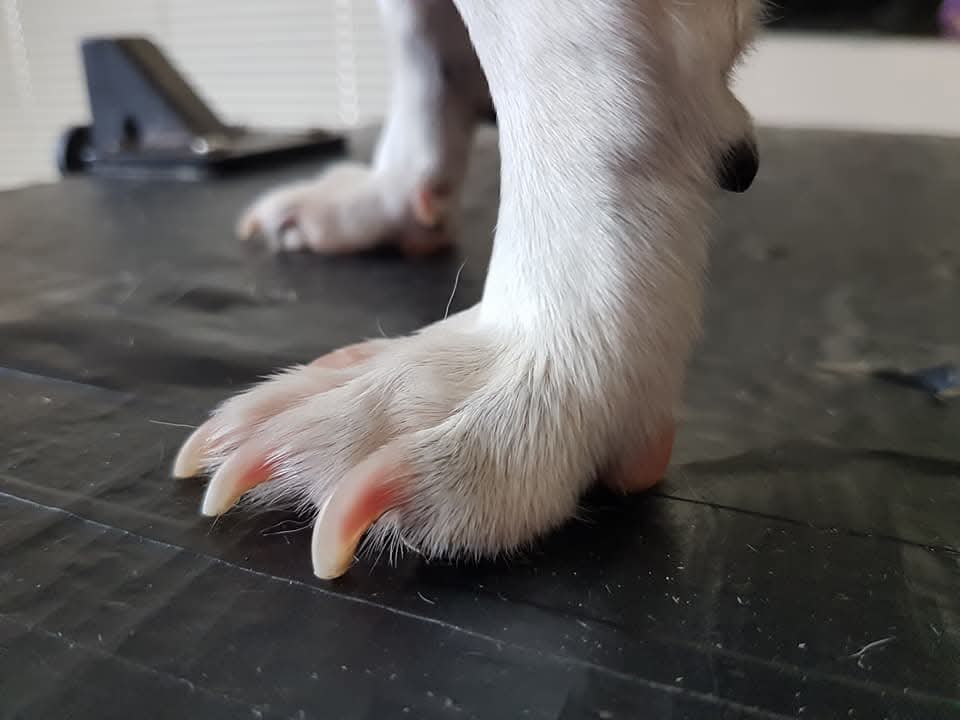
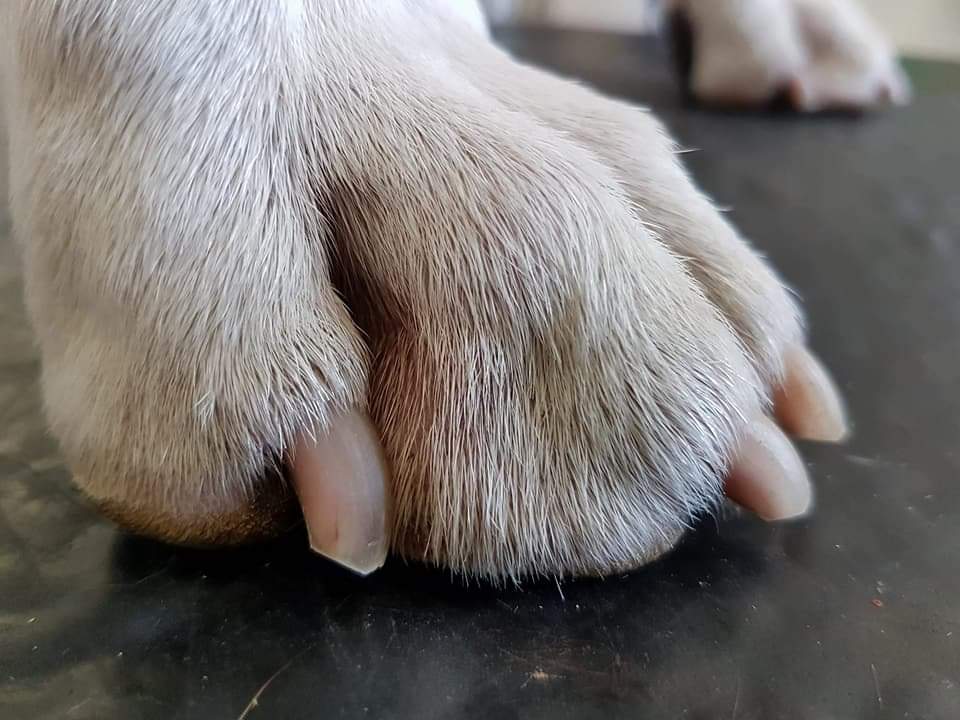
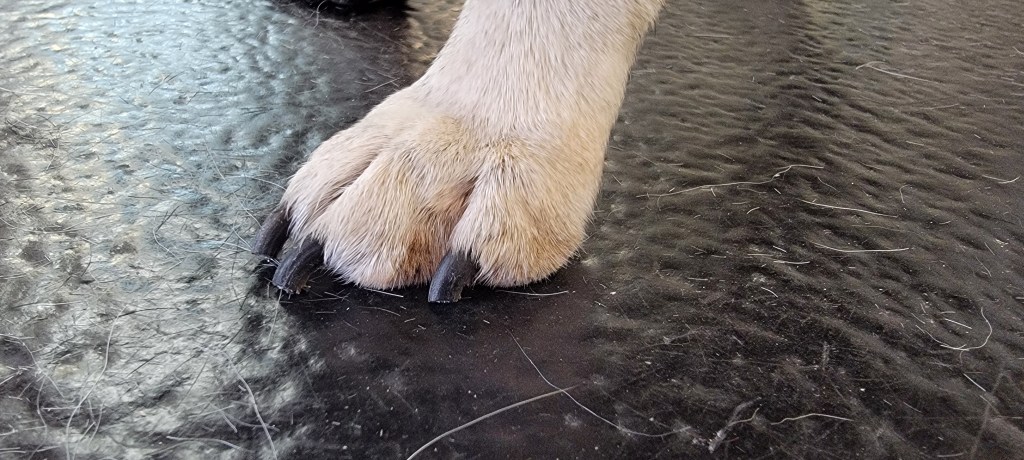
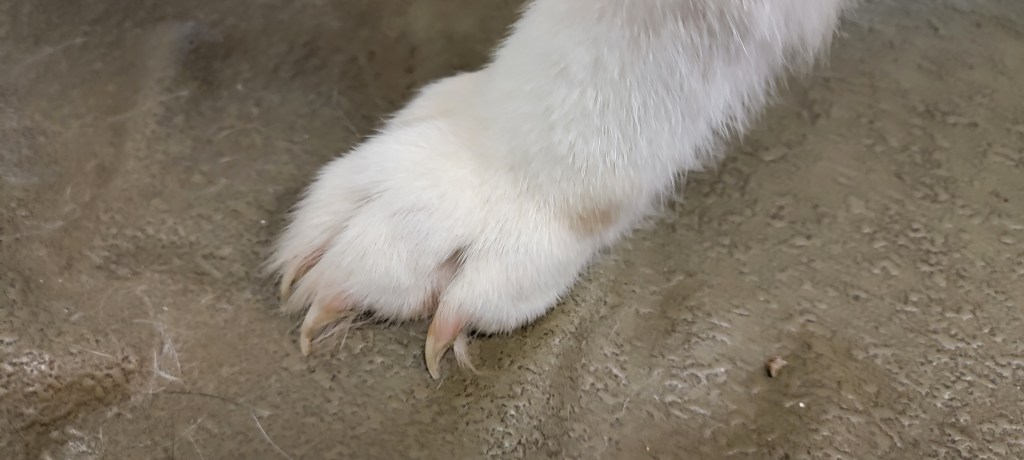
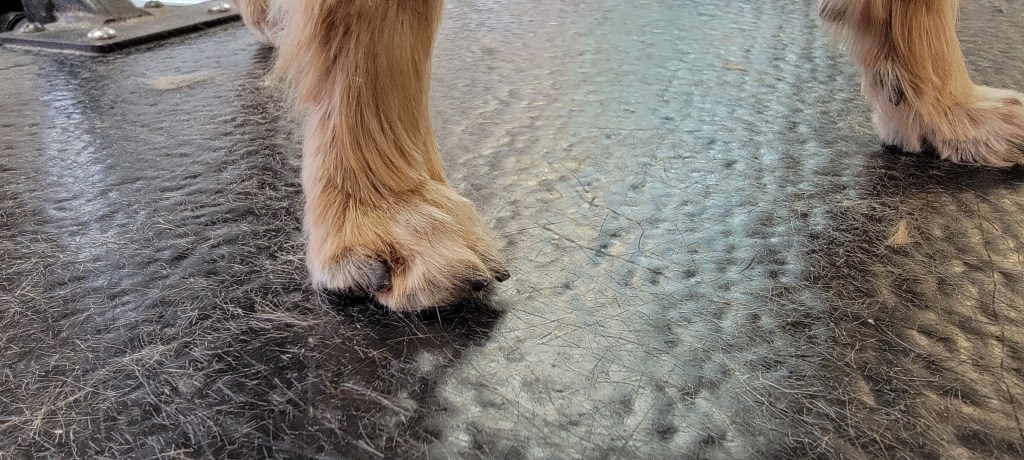
The other day, a client came in with her two dogs of the compact foot and compact movement type. When we put the first dog on the table, she asked if the quick would recede on the dogs’ nails if she brought them in weekly. I looked at the dog’s feet. The nails were just barely touching the table while it stood. It had been about four weeks since the nails had last been trimmed, and after this trimming, they wouldn’t be touching the ground at all. That is the goal. I told the client that the dog’s nails were a perfect length, and weekly trimming would have no benefit. It would be a waste of her time and her money. The client explained that she had seen someone on the internet talking about how the blood vessel in the nail can recede with frequent trimming recommended weekly nail trimming.
This is where internet advice becomes tricky, and no, it’s not lost on me that I’m typing this on the internet. But the person on the internet isn’t looking at your dog. In terms of nail trimming, it’s ideal if you can have your dog’s nails trimmed frequently enough that when freshly trimmed, the nails are not touching the ground when the dog is standing normally. Sometimes, this is next to impossible if the nails have already gotten too long and the quick has grown out. In young dogs, it may recede with frequent trimming, but not significantly. You’re really just trying to keep the problem from getting worse. In older dogs, the quick is not likely to recede even with frequent trimming. In that case, you just do your best to keep it from getting worse. Trimming every 4 – 6 weeks is usually adequate to maintain for most dogs. Some dogs can go longer. Some dogs, including seniors who don’t move as much and who move more gingerly when they do move, may need them done closer to every 3 weeks. But your vet or groomer can give you a better idea because they are the ones looking at your dog’s feet.
Breed, individual foot shape, gait, and activity level all influence how often nails need to be trimmed, but the goal is the same: the nails not touching the ground when the dog is standing immediately after they’re trimmed. Your dog is supposed to have nails, not nubs, so don’t stress too much about it, no matter what the internet says. You just don’t want them to get so overly long that they start to push the toes out or shift the weight onto the back of the foot when the dog is standing or that that are at risk of getting caught / torn.
 Thoughtful Paws Grooming